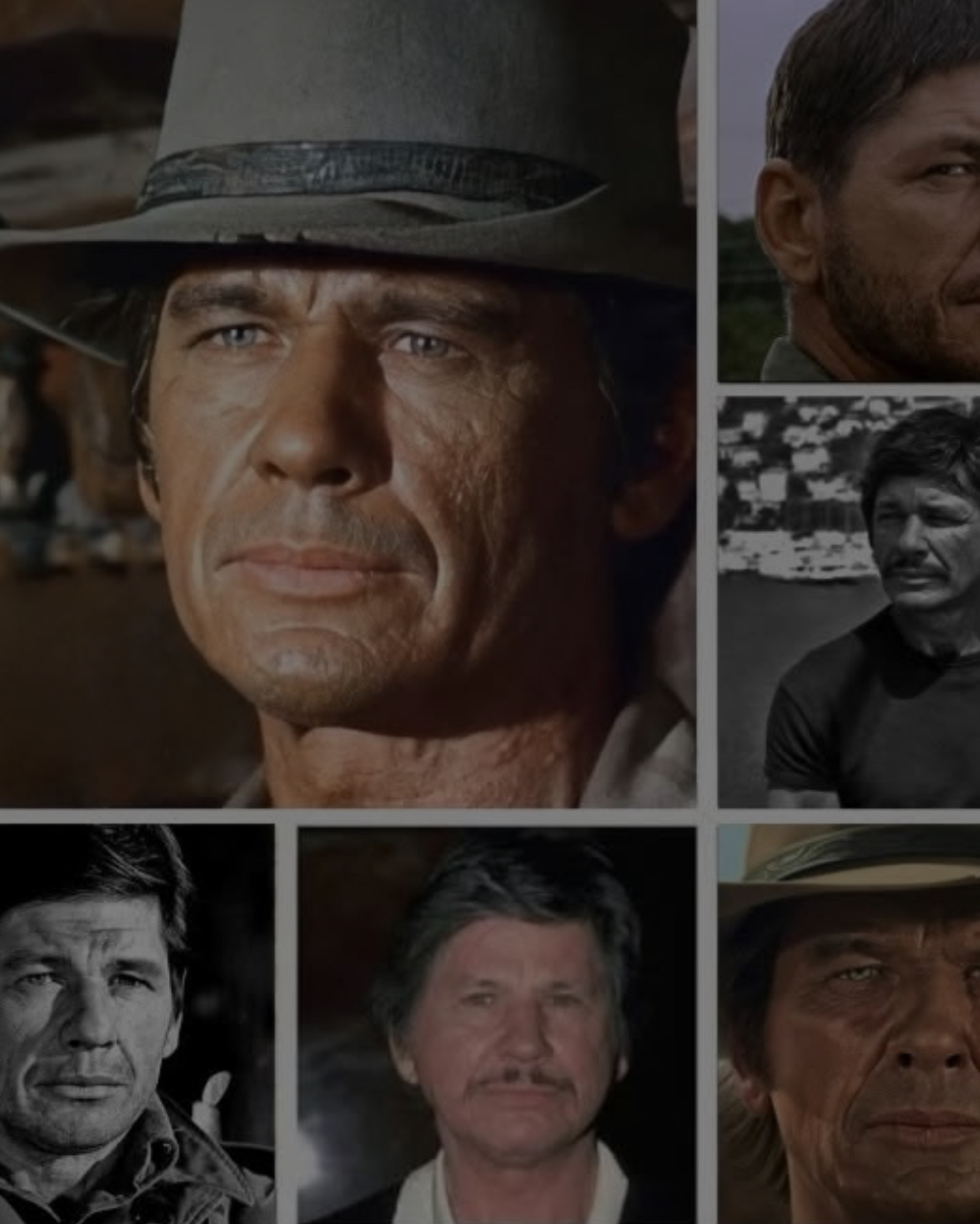
Charles Bronson, born Charles Buchinsky to a working-class family of Lithuanian immigrants in Pennsylvania, grew up in poverty and worked in the mines before serving in the U.S. Army Air Forces during World War II. These early experiences were not just backstory for his roles—they shaped the character and unique presence he brought to the screen.See more…
On screen, Bronson didn’t fill scenes with words; he filled them with presence. Every scar, every narrowed glance, every long, silent pause reflected a life fully lived. In The Magnificent Seven, he stood shoulder to shoulder with legends without fading into the background, while Sergio Leone in Once Upon a Time in the West used his silence as a weapon, turning stillness into tension.
His role in Death Wish as Paul Kersey made Bronson the face of a new kind of anti-hero. Controlled, deliberate, and driven by a moral certainty carved from stone, he didn’t shout his anger—he contained it, and that restraint made it all the more powerful. His impact came not from volume, but from conviction.
Bronson never chased the spotlight; it naturally found him. He looked like a man who had endured life’s hardest blows and refused to be broken. This authenticity made him unforgettable, a model for actors seeking to convey depth through presence rather than dialogue alone.
When Charles Bronson passed away in 2003, he left behind more than a filmography—he left a blueprint for authenticity. In an industry often built on spectacle, Bronson proved that the quietest man in the room—the one who doesn’t need to prove anything—is often the one who endures the longest. And decades later, that silence still speaks.
Leave a Reply