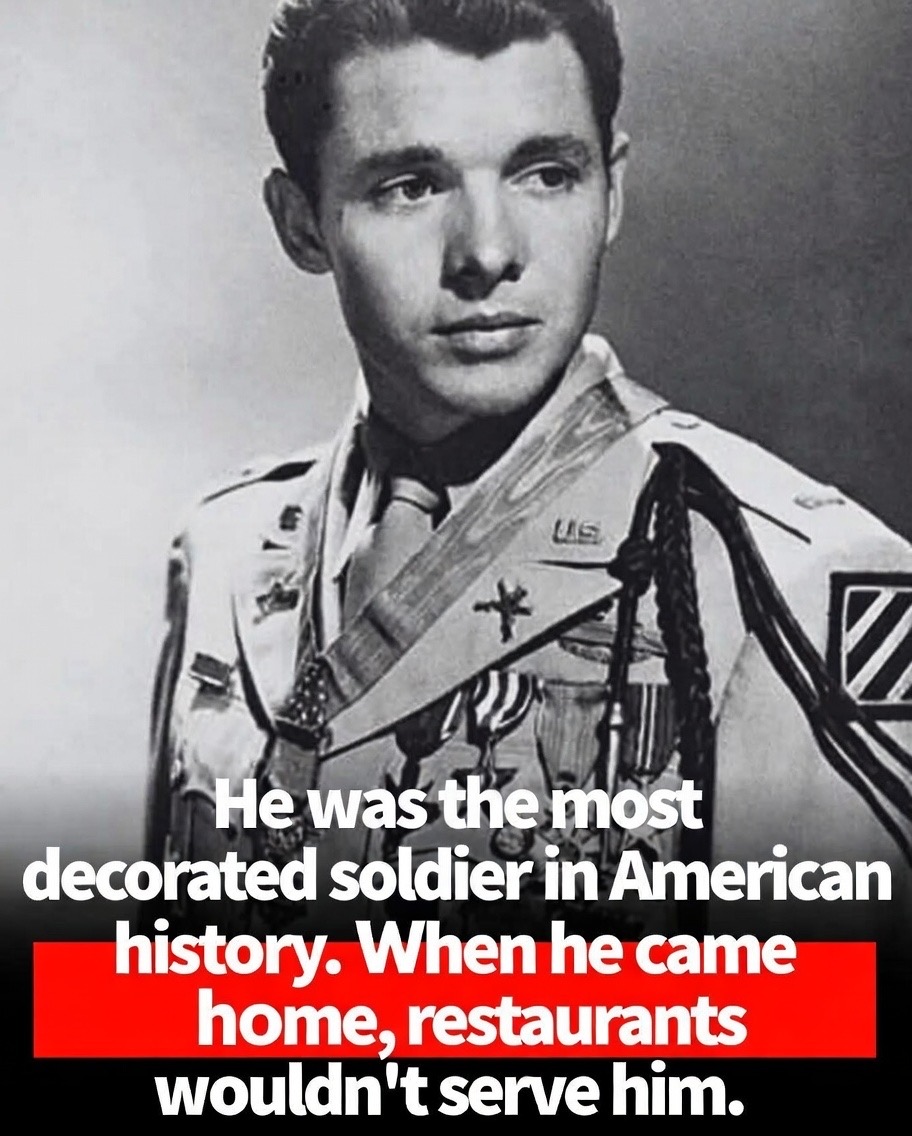
Audie Murphy, born in 1925 in rural Texas, grew up in extreme poverty. One of twelve children, he lost his mother at sixteen and left school in fifth grade to help support his family. His early life was marked by hardship, but it couldn’t prepare him for the war ahead.See More…
At just seventeen, Murphy tried to enlist in the military. He was turned away by the Marines and paratroopers for being too small, standing only 5’5” and weighing 112 pounds. Finally, the Army accepted him, sending him to Europe in 1943, where his courage would become legendary.
During World War II, Murphy performed acts of heroism that defy belief. In Italy, he single-handedly held off an entire company of German soldiers. In France, he climbed onto a burning tank destroyer, wounded and exposed, to hold back 250 German troops and six tanks—fighting for nearly an hour under fire. He was only nineteen.
By the war’s end, Murphy had earned 33 military awards, including the Medal of Honor. He was hailed as America’s most decorated soldier, featured on the cover of Life magazine, and celebrated as a symbol of bravery. Yet when he returned home to Texas, fame offered little protection.
Walking into a local restaurant in uniform and wearing his medals, Murphy was met with a sign: “Whites Only.” Though white, poor and rural, he faced prejudice and dismissal. Even a decorated hero could be denied basic dignity.
Later, Murphy spoke openly about his struggles with what we now call PTSD, advocating for mental health care for veterans. He became a movie star, yet never forgot his roots or the invisible battles soldiers continue to fight long after the war ends. Murphy died in a plane crash in 1971, but his legacy of courage—and the hard truths about returning home—lives on.
Leave a Reply