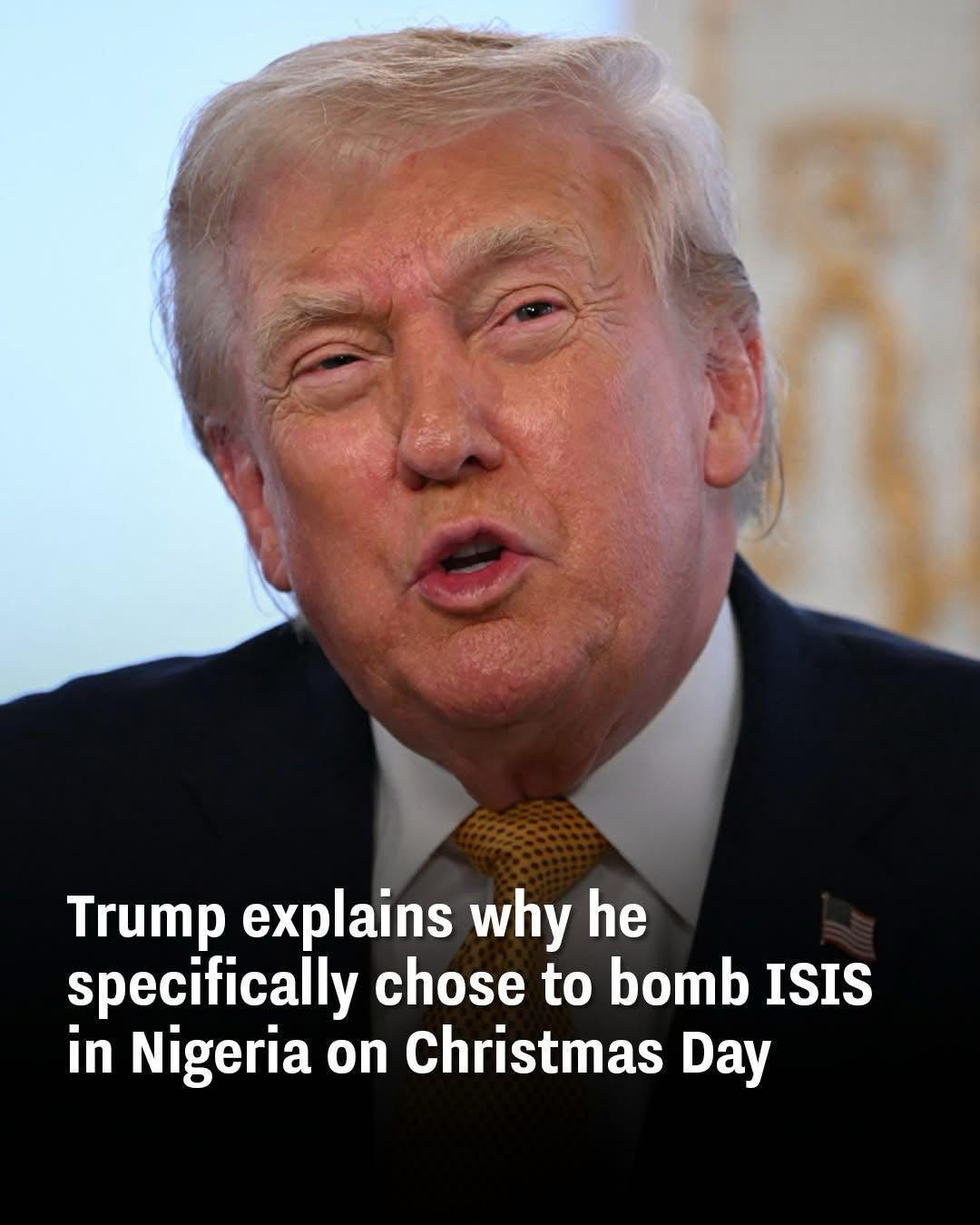
WASHINGTON / ABUJA — On Christmas Day 2025, the United States military carried out airstrikes against Islamic State (ISIS/ISIL)-linked militant camps in northwest Nigeria, an operation ordered by U.S. President Donald Trump and coordinated with the Nigerian government. The unprecedented strike — coming on a major holiday — has sparked international attention and debate.See More…
According to official statements, multiple ISIS fighters were killed in the operation, which took place in Sokoto State near the border with Niger. The U.S. Africa Command and Nigerian authorities confirmed that the mission was carried out with shared intelligence and cooperation.
President Trump took to his social media platform Truth Social to outline his reasoning, framing the strike as part of a response to long-standing militant violence affecting civilians — particularly Christians, whom the White House claims have been targeted. In his post, Trump described the strikes as “powerful and deadly” and suggested that they served as a warning to extremist groups.
“Tonight, at my direction as Commander in Chief, the United States launched a powerful and deadly strike against ISIS Terrorist Scum in Northwest Nigeria…” Trump wrote, saying the militants had been “targeting and viciously killing, primarily, innocent Christians.”
He also referred to the Christmas timing repeatedly in public comments, saying that the militants had “got a very bad Christmas present” and that postponing the operation until Dec. 25 was intentional to underline U.S. resolve.
But the response from Nigeria’s government and international analysts has been more cautious. Abuja’s foreign minister noted that Nigeria provided critical intelligence but stressed that violence in the region affects both Muslim and Christian communities, and that the mission was rooted in counter-terrorism cooperation rather than religion.
Broader Context: Nigeria’s Security Challenges
Nigeria’s security landscape has been troubled for years by a mix of extremist insurgencies, communal violence, and clashes between armed groups such as Boko Haram and Islamic State’s regional affiliates. Experts caution that airstrikes, though tactically useful, are unlikely on their own to resolve deep-rooted conflicts.
Human rights and political analysts have also pointed out that violence in Nigeria often has complex causes — including competition over land, governance gaps, and longstanding regional tensions — not just straightforward religious persecution.
Reaction and Future Outlook
The U.S. government has hinted at continued operations against extremist groups in West Africa, and Defense Secretary Pete Hegseth indicated that collaboration with Nigerian partners will remain a priority.
Meanwhile, global responses range from supportive — highlighting counter-terrorism cooperation — to critical, with some commentators questioning the timing and rhetoric surrounding the strikes. The international community continues to watch closely as events unfold.
Leave a Reply