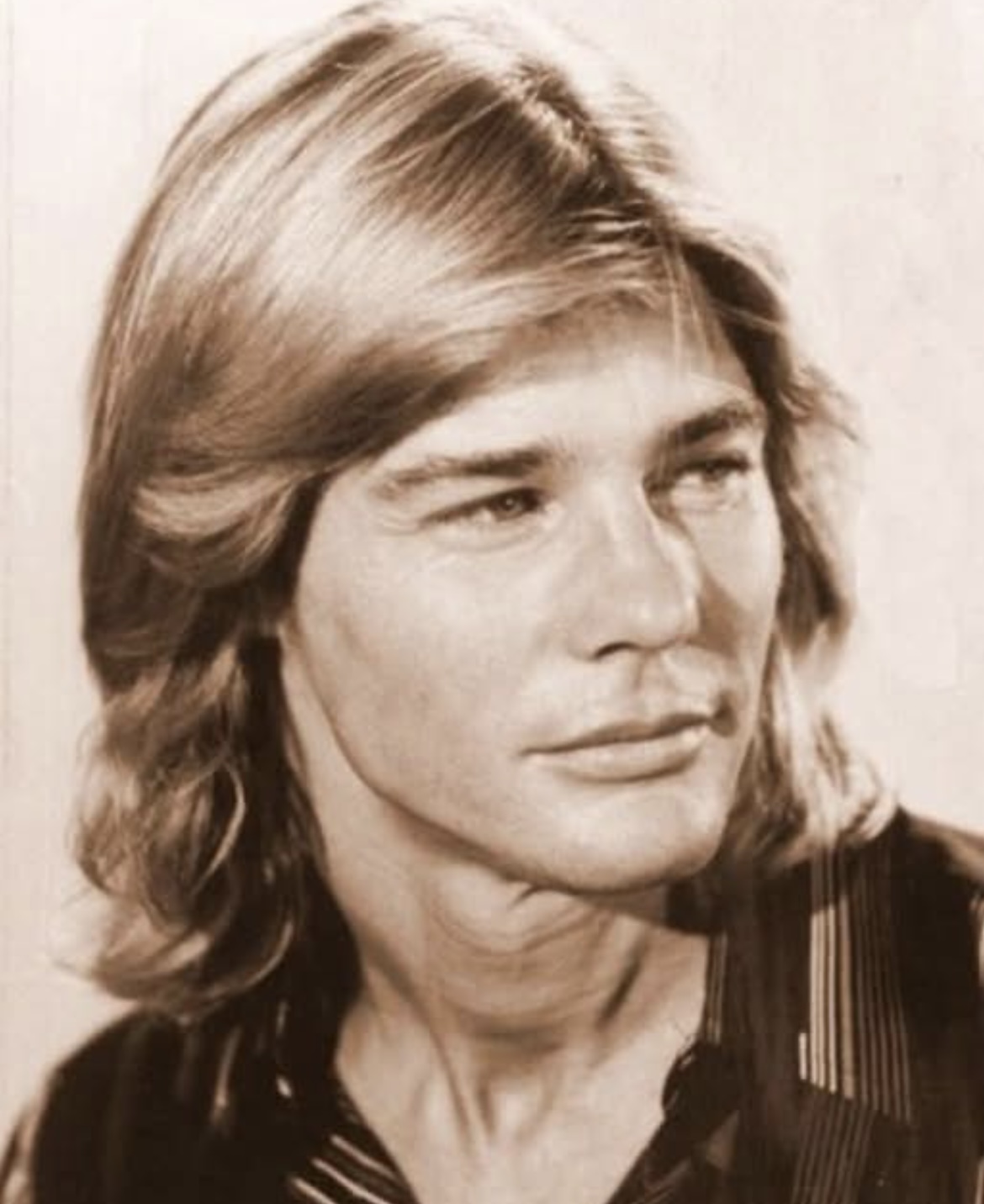
He began as a kind of beautiful accident—young, restless, and unwilling to follow the script that life seemed to hand him. College couldn’t hold his attention, structure didn’t suit him, and ambition, at least in its conventional form, wasn’t what drove him. When Hollywood found him, it didn’t feel like the start of something calculated. It felt more like recognition. As if the camera had simply discovered a presence that was already there, waiting to be seen. That presence belonged to Jan-Michael Vincent.See More…
What made him different wasn’t just his striking looks, though those certainly opened doors. It was something less tangible—an emotional transparency that couldn’t be manufactured. Onscreen, he carried a quiet intensity, a sense of longing that made even his stillness feel alive. There was always something slightly untethered about him, as if he belonged more to open landscapes than to sets and studios. Whether he was playing a rebel, a drifter, or a reluctant hero, there was an undercurrent of vulnerability that made his performances feel less like acting and more like exposure.
In an industry that often rewards polish and control, Vincent’s appeal came from the opposite place. He felt unpredictable, almost fragile in his authenticity. Audiences didn’t just watch him—they sensed him. There was a wounded nobility in the roles he inhabited, a suggestion that he trusted freedom more than structure, escape more than permanence. It gave his characters a kind of poetic tension, but it also hinted at something deeper within the man himself.
That same openness, however, came with a cost. The qualities that made him magnetic on screen left him exposed off it. As his career rose, so did the pressures that come with visibility, expectation, and excess. Hollywood, which had once seemed like a natural fit, became a more complicated environment—one that amplified both his strengths and his vulnerabilities.
When the fall came, it wasn’t sudden so much as relentless. Addiction began to take hold, eroding the discipline and stability required to sustain a career. Incidents followed—violence, legal troubles, and a series of devastating car accidents that left both physical and emotional damage in their wake. The narrative that had once been about promise and charisma shifted into something darker, more difficult to watch. The industry that had embraced him began to distance itself, not out of cruelty, but out of the practical limits of a system that depends on reliability.
The injuries he suffered were severe, culminating in the loss of part of his leg. His voice, once smooth and expressive, became roughened, carrying the weight of years of strain. On the surface, it looked like a complete unraveling—the kind of story Hollywood tells as a cautionary tale. The golden boy, undone not by competition, but by forces within himself.
And yet, what makes Vincent’s story linger isn’t just the fall—it’s what came after. He didn’t disappear entirely. He didn’t vanish into obscurity in the way many expected. Instead, he retreated into a quieter existence, eventually settling in Asheville, far from the spotlight that had once defined him. There, stripped of glamour and expectation, he lived a life that was smaller in scale but not without meaning.
There is a different kind of courage in that phase of life, one that doesn’t get celebrated in headlines or awards. It’s the courage to continue after loss, to exist without the identity that once defined you, to rebuild some version of self when so much has been stripped away. Vincent’s later years weren’t marked by redemption in the traditional, cinematic sense. There was no grand comeback, no neatly tied resolution. But there was endurance. There was survival.
His story resists easy interpretation. It doesn’t offer a clear moral or a satisfying arc. Instead, it leaves behind a series of questions that feel more human than any tidy conclusion. How much of a person can be lost before they are no longer the same? What remains when the external markers of success—fame, beauty, recognition—fade or are taken away? And is there a quiet dignity in simply continuing, even when the world has stopped watching?
For those who remember him at his height, the image of Jan-Michael Vincent is frozen in time—youthful, intense, full of possibility. But the full story is more complicated, layered with both brilliance and pain. It’s not just about what he achieved, or what he lost, but about the space in between—the fragile, often uncomfortable reality of being human in a world that prefers its stories clean and complete.
In the end, his life lingers like the fading glow of an old film reel—imperfect, unfinished, but impossible to ignore.
Leave a Reply